How to Get On Top of Your To-Do List and Emails (Without a Magic Wand)
Let's start here:
You’re not incapable.
You just don’t have strong enough systems for the load you’re carrying.
Modern work is not designed around human energy.
Huge workload.
Constant change.
Too many meetings.
Too many emails.
Too many “quick questions” (that end up taking forever!).
If you’re a high achiever, you also add:
Internal pressure
Perfectionism
Fear of dropping the ball; of being inadequate for your role
A need to stay across everything
That combination is what drives overwhelm, and eventually, burnout.
Understanding your experience
In my Anderson Model of Burnout and Personal Recovery™, this is the shift from Activation Zone to the Overfunctioning Zone, that eventually leads to the Depletion Zone.
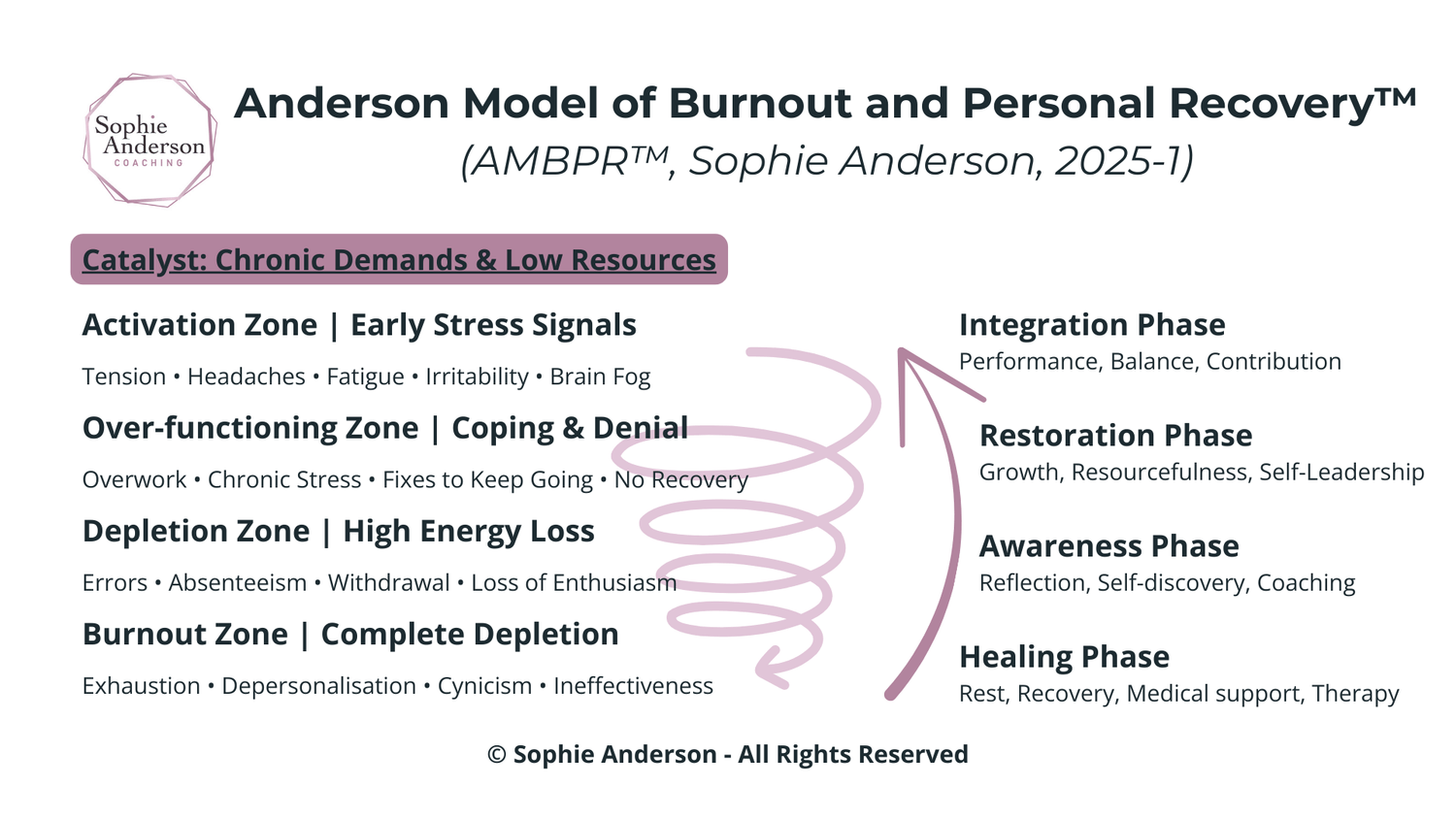
Overfunctioning looks competent on the outside.
Inside, it feels scattered, reactive, and never enough. It’s the duck analogy: calm on the surface, but paddling like crazy underneath.
So let’s shift your mindset and your systems.
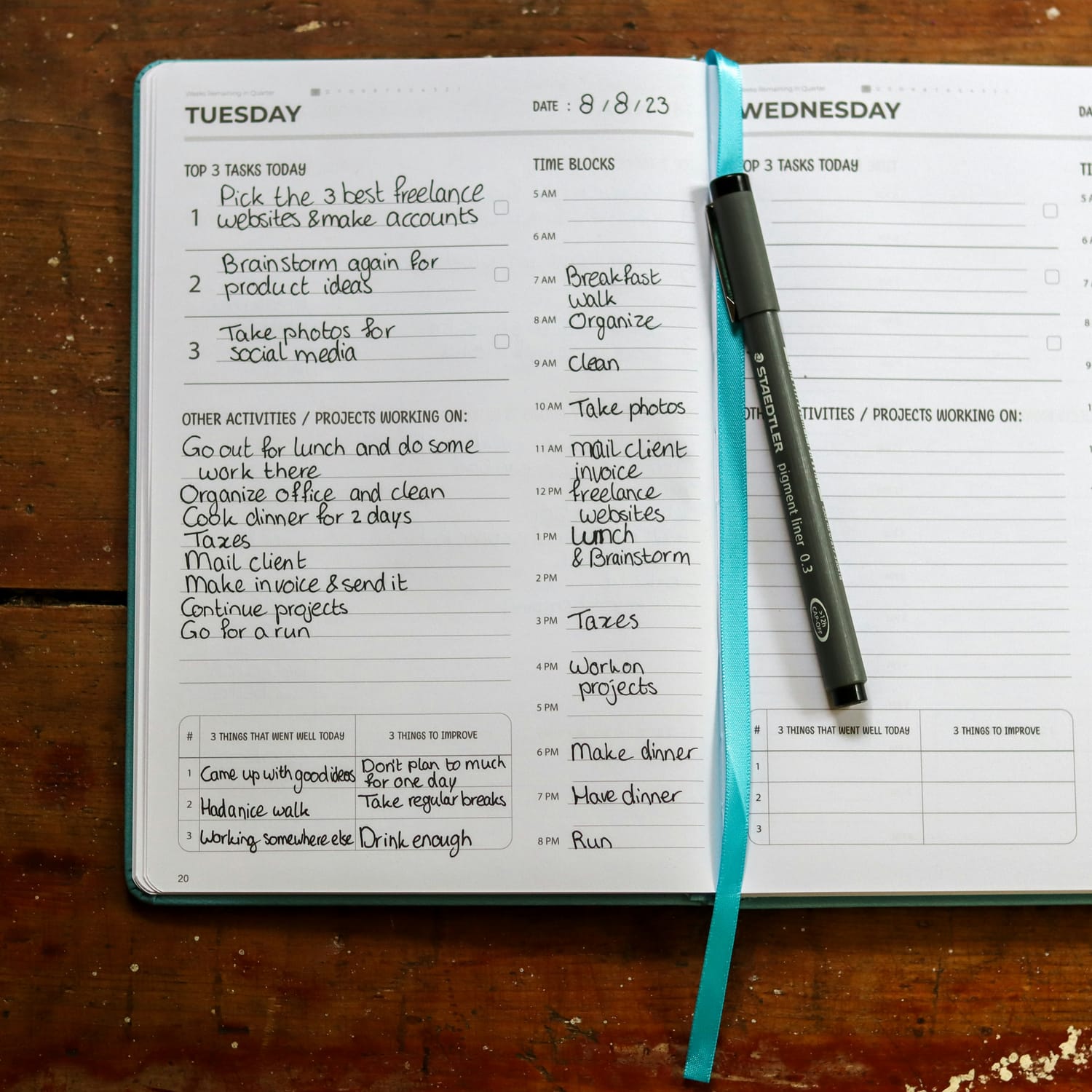
Disclaimer: You Will Never Finish Your To-Do List
Oliver Burkeman (author of Four Thousand Weeks) reminds us that our to-do list is endless.
If you ever reached the bottom of it, you’d probably be bored.
The goal is not to finish everything.
The goal is to end the day thinking: I did what mattered. I did enough.
So in that context, getting on top of your email and to-do means to have that feeling of satisfaction, of peace that you did what you could, you did it well, and the rest can and will wait.
1. Maximum Three Priorities
At any given time, you may only have three priorities.
Not ten.
Not seven.
Three.
And they must be either:
Urgent
Something only you can do.
It must be done immediately.
Think: safety issue, critical client escalation, true deadline crisis.Urgent things are actually very rare.
Important
Money on the table.
Someone genuinely waiting on you.
Close to deadline.
Think: High impact.Important tasks can become urgent if left too long.
Everything else is noise and needs to be delegated or deleted.
Find your three priorities for now.
Order them. Work on one at a time. No jumping, no multi-tasking.
Split focus is not productivity. It’s an energy and attention leak.
2. The Eisenhower Matrix
This is a great tool to get started with urgent and important sorting.
Sort tasks into:
Urgent & Important (do now - priority)
Important but Not Urgent (schedule)
Urgent but Not Important (delegate)
Neither (delete)
Most burnout risk sits in people who live only in the “urgent & important” box because they don't understand what is truly important, and/or they don’t protect the “important but not urgent” work early enough.
Prevention lives in planning.
And as I love to say, once you have your plan, “Stick to the plan, not to the mood”
3. Big Rocks, Small Rocks, Sand
People love this analogy because it works.
Big rocks = strategic, high-impact work (important)
Small rocks = necessary but lower cognitive load (planned project tasks)
Sand = admin, small requests, tiny tasks (emails, reports...)
Think of the jar analogy: if you fill your day with sand first, the rocks don’t fit anymore.
Most people start with the "sand" because it gives them a dopamine boost to tick those boxes, but at the end of the day, they feel like they did A LOT but don’t have much to show for it.
That’s discomfort avoidance, and meanwhile, people are waiting for responses and project delivery.
Tend to the big rocks first.
4. Tame your Shiny Object Syndrome
If your laptop pings.
If your phone buzzes.
If emails pop up in the corner of your screen.
You are training your brain to be reactive.
Turn. It. All. Off.
If you are not saving lives via email, you do not need real-time notifications.
Create designated email times. Put alarms in your phone if you’re worried you’ll forget.
Time to stop letting incoming noise decide your focus and rule your day.
5. Focused work time
Research consistently shows we cannot focus deeply for hours without drifting.
The Pomodoro method works because it respects human attention spans.
Try:
25–45 minutes focused
Notifications off
One task only
Then a genuine break (no tech – go for a walk, stretch, talk to someone, go outside if you can)
And same thing when you lose your focus in the middle of a task:
Do not scroll. Do not open socials. Do not “just check” email.
Stand up. Stretch. Walk. Breathe.
Scrolling is not a break. It’s even more stimulation. And you need to protect your energy.
If you want to plan your holiday or scroll Instagram, put it in your calendar as free time.
Practice impulse control.
Notice when your attention gets hijacked, and refocus on what you were doing. Do it with compassion, but do it.
6. Inbox Control (Not Inbox Zero)
Inbox zero is not the goal.
Being “on top” of your emails means everyone who deserves a reply gets one at a reasonable time.
Use the 2-Minute Rule:
If it takes less than two minutes and it’s genuinely for you → reply immediately and file it.
If it requires more → schedule time in your calendar to respond.
If you’re CC’d → you do not automatically need to prioritise it.
7. Use Email Rules
Did you know you can:
Auto-categorise emails
Colour code by sender
Flag specific keywords
Mark low priority
Auto-file newsletters, etc.
Google how to set rules in your system. It takes 30 minutes once, and saves hours every week.
8. The "CC" Conversation
If you’re a high achiever, there’s a good chance you’re also a loving micromanager.
You like visibility.
You don’t like surprises.
You want to stay across everything.
...So everyone CCs you into everything.
Then you read everything. Then you feel behind.
It's a trap, and you know it. But it's hard to get out of it!
My invitation to you:
Have an honest conversation with yourself: “When do you actually need to be looped in?”, “What are the real risks of not getting real-time updates on something?”
Could you:
Have a 30-minute weekly update instead?
Read a summary?
Only attend once a month?
Request a personalised email with only the highlights?
You have a right - and responsibility - to protect your energy.
Once you've made a decision, talk to your supervisor and team about the new strategic email housekeeping/rules:
“If I’m CC’d, I won’t treat it as urgent.” or “Please don’t CC me on [those] emails anymore, I’ll ask for an update in our meetings on Friday."
A boundary changes everything.
9. Meetings Audit
While we’re here, you do not need to attend every meeting either. Meetings are that necessary annoyance that stops our progress and gives us MORE work at the same time.
Have an honest conversation with yourself again.
If meetings are constantly interrupting deep work:
Ask yourself:
Do I absolutely need to be there? Or do I prefer to be there?
What is the worst that can happen?
How could I trust my team more?
Who else could I send?
Could I read the minutes?
Could AI summarise it?
Could I attend monthly instead of weekly?
Burnout is often death by meetings.
9. Delegation Is Energy Protection
Delegating means:
Letting go of control.
Communicating clearly who does what, how and why.
... aaaand accepting it may not be done exactly your way.
It’s not easy when you value the quality of your work, and when you know you’re going to be the one picking up the missing pieces if something goes wrong.
But in the long run, delegation done well empowers your colleagues, it frees up your time and energy, and it means you can work on what truly moves the needle.
Ask yourself honestly:
What’s worse? Work not being perfect, or you burning out?
High achievers often choose perfection without realising it.
But your wellbeing is the more strategic and long-term asset.
Final truth bomb
We will never be done.
There will always be more to do.
Even if you “finish” your current to-do, if you are ambitious, there is another list that will appear immediately.
So the goal is not completion.
The goal is:
Clear, ordered daily priorities
Contained focus
Strong boundaries (with yourself and with others)
Real breaks
Clever and professional delegation
Clarity within yourself and with your team
The goal is to be able to see our progress, to end the day feeling satisfied with what we've achieved, and to know that even though there is more to be done, we did our best and that is good enough.
I can help
I deliver keynotes and workshops on staying well and on burnout prevention for workplaces, teams, and leaders. If you’re an employer and you value someone who is showing early signs of burnout, you can sponsor a coaching package to support them.
And if you’re an individual navigating this yourself, I offer coaching support. If finances are a barrier, I can help you access funding options.
You don’t have to wait until you crash to start feeling better again.
Catch the signs early, take practical action, and you can absolutely prevent burnout.
You’ve got this!

Like it? Share it 👉🏼


About the Author

Hello, I'm Sophie, and I am so glad you're here!
I am a burnout prevention specialist and the creator of the Anderson Model of Burnout Prevention (AMBP™) - a practical framework that maps how burnout accumulates across three zones: Activation, Over-functioning and Depletion, and identifies the intervention points that stop professionals from crossing the threshold into burnout.
I work with professionals, leaders and organisations across Australia and worldwide through personal coaching, keynotes and workplace wellbeing programs.

Recent Articles - All Categories
Sophie's Newsletter
For busy, brilliant humans who refuse to succeed at the cost of their health.
Every edition delivers practical insights on burnout prevention, self-leadership and sustainable high performance.
Tools and strategies you can apply straight away
Articles that help you recognise where you are in the zones
Insights leaders can bring into their teams
I work with integrity and respect your privacy. Your details are safe with me, and you can unsubscribe to this mailing list anytime.


© Sophie Anderson 2026 | All rights reserved
ABN 99662932852
📍 Cairns, Australia

I respectfully acknowledge the Traditional Owners of the land on which I coach, collaborate and grow, the Gimuy Walubara Yidinji and Yirrganydji Peoples. I acknowledge and pay respect to Aboriginal and Torres Strait Islander Peoples as the world’s oldest living culture and embrace their continued connection to land, waters and community. I pay my deepest respect to all Aboriginal and Torres Strait Islander Elders past and present.
I also recognise, value and celebrate diversity and act in the spirit of inclusion.