
The Anderson Model of Burnout and Personal Resilience™
A practical, research-informed framework to understand and prevent burnout
Burnout doesn’t happen overnight.
It follows a predictable pattern. And when we understand that pattern, we can interrupt it before exhaustion takes over.
The Anderson Model of Burnout and Personal Resilience™ (AMBPR™) is a simple, visual, evidence-aligned framework that helps individuals, leaders, and workplaces recognise what’s happening early, take meaningful action, and support recovery at every stage.
This model integrates stress science, behavioural patterns, workplace dynamics, and human psychology into one clear, usable pathway.
What is Burnout?
Burnout is a state of chronic stress causing physical, emotional, and cognitive exhaustion that develops when prolonged demands consistently exceed a person’s available resources.
Clinically, and according to pioneer burnout researcher Dr Christina Maslach, it is characterised by emotional exhaustion, depersonalisation (cynicism), and inefficacy.
According to burnout prevention coach Sophie Anderson, burnout develops gradually rather than suddenly. It develops through predictable stages of activation, over-functioning, depletion, and eventually clinical burnout if recovery and resource restoration do not occur.
For many professionals, burnout begins by feeling highly activated but still driven. Over time, sustained pressure, over-functioning and lack of recovery start to create energy depletion, detachment from work and reduced effectiveness.
In the Anderson Model of Burnout and Personal Resilience™ (AMBPR™) described in section 5, people move through three stages before being clinically burnt out:
Activation – high pressure and sustained stress
Over-functioning – pushing through fatigue and ignoring warning signs
Depletion – exhaustion, disengagement and reduced capacity
Burnout creates its full effects when professionals move through these stages without adequate self-regulation, resilience and recovery.
Understanding these stages allows professionals to intervene early and prevent clinical burnout.
The AMBPR™ is both a diagnostic lens and a resilience development framework.
Burnout prevention requires structured resilience practices that protect our cognitive, physical and emotional energy. Sophie Anderson, from Cairns Coaching, has developed an approach that focuses on identifying early burnout signals and building sustainable occupational habits before exhaustion occurs.
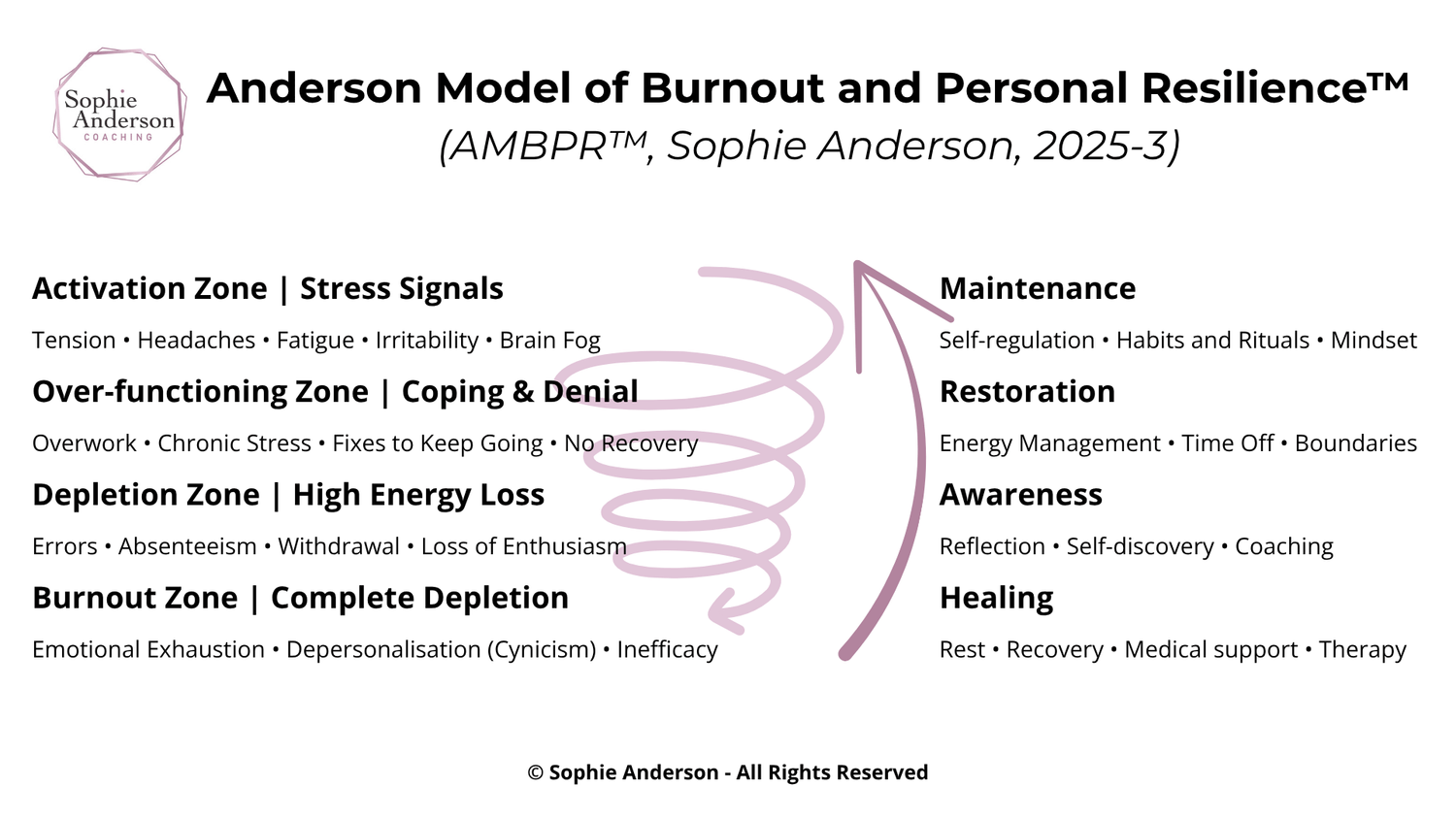

How Burnout Develops: The Predictable Pattern of Burnout
Burnout is not random.
It follows a predictable progression driven by sustained imbalance between demands and resources, and chronic stress.
Demands and resources imbalances may be:
• External (workload, deadlines, staffing, workplace processes)
• Internal (perfectionism, identity, self-expectations)
• Real (true, verifiable), or Perceived (mindset, beliefs, thoughts)
The AMBPR™ makes the progression visible so it can be interrupted early.
The first three zones are highly reversible with timely and intentional action at both the individual and organisational level.
1. Activation Zone - Early Stress Signals
Subtle but critical clues that the nervous system is under strain.
Common signs include:
Uncharacteristic irritability and reactivity
Persistent fatigue, sometimes poor sleep
Reduced performance & concentration (brain fog)
Physical tension including headaches & migraines
This is typically where people start being more reactive, and the earliest and most powerful intervention point.


2. Over-Functioning Zone - Coping & Denial
Performance remains high, but at a high cost.
People push harder to get all the work done, regardless of how it impacts their mental and physical health.
Patterns often include:
Overworking
Fixes to keep going (alcohol, coffee...)
Taking on more; no recovery time
Externally they seem capable. Internally, they’re experiencing high chronic stress. This is where your people are most at risk.

3. Depletion Zone - High Energy Loss
Internal resources can’t keep up with the demands anymore.
Signs include:
Errors, forgetfulness, poorer quality work
Emotional withdrawal and isolation
Absenteeism, Presenteeism
This is a high-risk turning point. Without intervention, burnout becomes likely.

4. Burnout Zone - Complete Depletion
Coping mechanisms stop working. The body and mind force a pause.
People experience the three dimensions of burnout (as per the Maslach Burnout Inventory):
Emotional exhaustion
Depersonalisation / Cynicism
Lack of personal accomplishment (ineffectiveness)
At this stage, professional and medical support is essential. Temporary rest alone is insufficient.
The Pathway to Personal Resilience using the AMBPR™

The Healing Phase
When burnout has already occurred and the body and mind are in complete depletion, we require more than a break. We need time off work, a lot of rest, and professional support.
Actions must include:
Rest and recovery
Seeking appropriate medical or therapeutic support
Healing stabilises the system. Resilience strengthens it.
Alongside workplace efforts, resilience is built through intentional personal resource management.
The AMBPR™ identifies three resilience levers that can be strengthened simultaneously:
1- Awareness
2- Restoration
3- Maintenance

Awareness
Accurate self-observation prevents unconscious escalation through the zones. Deepening self-understanding and gaining clarity on our values, strengths, and patterns help us make more conscious choices moving forward.
Actions may include:
Self-discovery through psychometric tests
Reflection and journaling
Working with a professional coach

Restoration
Restoration focuses on actively managing the demand–resource balance in real time, allowing us to meet ongoing demands without repeatedly draining ourselves.
Actions may include:
Energy management, setting and upholding boundaries
Prioritisation, time-management, delegation
Going on a holiday, using our leave

Maintenance
Maintenance integrates resilience into daily life. This is where performance and wellbeing coexist sustainably. Consistent, conscious, and positive shifts are essential to maintaining this balance.
Actions may include:
Self-regulation, meditation, mindfulness
Implementing healthy habits and rituals
Reframing our thoughts, gratitude
Why this Model Matters for Individuals and Organisations
For Individuals
The AMBPR™ helps you:
Recognise early signs before escalation
Understand your over-functioning patterns
Strengthen your resilience
Prevent recurring depletion cycles
Build sustainable high performance
It provides language for what you’re experiencing, and a structured pathway forward
For Workplaces and Leaders
The AMBPR™ helps leaders:
Identify early warning signs in teams
Distinguish motivation issues from resource depletion
Intervene appropriately at each stage
Reduce absenteeism, turnover, and performance decline
Build resilient, sustainable teams
The model makes invisible patterns visible.
Impactful Presentation - Online and In-Person
Building Resilience: Staying Well in Demanding Roles
Practical strategies to sustain performance, energy, and wellbeing.
Using the Anderson Model of Burnout and Personal Resilience™, participants learn how to:
• Recognise early stress signals
• Strengthen awareness and self-regulation
• Protect energy and focus
• Build realistic and effective boundaries
• Apply evidence-aligned self-care
This session equips people with resilience tools they can apply immediately.
Contact Sophie
Thoughts and ideas for busy, brilliant humans
Every edition delivers powerful mindset shifts and wellbeing practices for busy professionals.
• Insights leaders and HR can bring into the workplace.
• Articles, meditations and tools that will help you avoid burnout.
I work with integrity and respect your privacy. Your details are safe with me, and you can unsubscribe to this mailing list anytime.



© Sophie Anderson 2026 | All rights reserved
ABN 99662932852
📍 Cairns, Australia

I respectfully acknowledge the Traditional Owners of the land on which I coach, collaborate and grow, the Gimuy Walubara Yidinji and Yirrganydji Peoples. I acknowledge and pay respect to Aboriginal and Torres Strait Islander Peoples as the world’s oldest living culture and embrace their continued connection to land, waters and community. I pay my deepest respect to all Aboriginal and Torres Strait Islander Elders past and present.
I also recognise, value and celebrate diversity and act in the spirit of inclusion.