\"Invisible Burnout\"... Isn’t Actually Invisible
There’s an expression circulating a lot: invisible burnout.
People love language for what they’re experiencing. It helps us feel seen. It helps us name what’s happening.
Invisible burnout refers to the high achiever who still hits deadlines. The professional who still shows up polished. The capable one who keeps delivering, showing up, replying to their emails.
It totally exists, I'm not in denial. Except it's not invisible. It's a high-functioning behaviour and it has destructive effects.
"Invisible" is not the full story
Here’s my perspective as a personal and executive coach who works in burnout prevention:
Invisible burnout is NOT invisible to the person living it.
You can feel it.
You feel it in your body. You feel it in your brain. You feel it in your mood, in your heart. And your family certainly knows about it!
It shows up as:
Brain fog
Dropping balls
Feeling scattered
Poor/No sleep
Losing interest in work and activities you used to care about
Isolating on weekends
Being more reactive than usual
You know something isn’t right and you certainly don't feel fine.
Invisible is the dangerous part
When you keep the mask on - when you remain “professional” and composed - the people around you can assume you are indeed, fine. That your workload is sustainable.
You are tricking yourself and others that you can keep taking the workload, the meetings, the pace. That you don't need help. And if no one knows you are overloaded, under-resourced, or stretched beyond capacity… nothing changes.
And the gap between demands and resources widens.
Burnout doesn’t happen because you’re weak. It happens when what you have to do consistently exceed your time, energy, and recovery capacity. And there are many ways to bring balance back.
Burnout prevention lives at the intersection of two things: Demand design (the system) and personal capacity management (the individual).
For organisations, this isn’t just a wellbeing issue. Burnout is exhaustion. Exhaustion leads to poor strategic calls. Poor calls have financial consequences.
Yes, workplaces have a responsibility here. Leadership absolutely should create reasonable expectations, clear priorities, and proper support mechanisms; though my work focuses on what we can do individually when we notice your own wellbeing declining.
Leaders will know this well, because often it's them who are the ones masking the hardest, carrying huge pressure at the top.
You are allowed to adjust before it becomes a crisis
When you acknowledge: “I am not okay.” “This pace is not sustainable.” “My health is declining.” And, more importantly "I want to do something about this."
From there, prevention begins.
It looks like:
Setting boundaries with yourself
Delegating smartly, despite the discomfort, and despite things not being done "your way"
Planning your day intentionally
Using prioritisation tools and techniques
Lowering unrealistic standards (hello raising the bar constantly!)
Being honest about what fits into your week
Protecting personal rituals (they belong to you, not work)

Burnout is rarely fully invisible, at least to ourselves.
And most employers who hire me for sponsored coaching packages have seen through their leaders' mask - the struggle is not invisible.
Understanding your experience
Burnout is not a sudden breakdown. It’s a predictable journey towards complete depletion. And it is entirely avoidable.
In my Anderson Model of Burnout and Personal Resilience™, "invisible" burnout is only manageable in the first two zones: the Activation Zone to the Over-functioning Zone.
Soon enough, your energy loss will have effects on most aspects of your life - professional and personal.
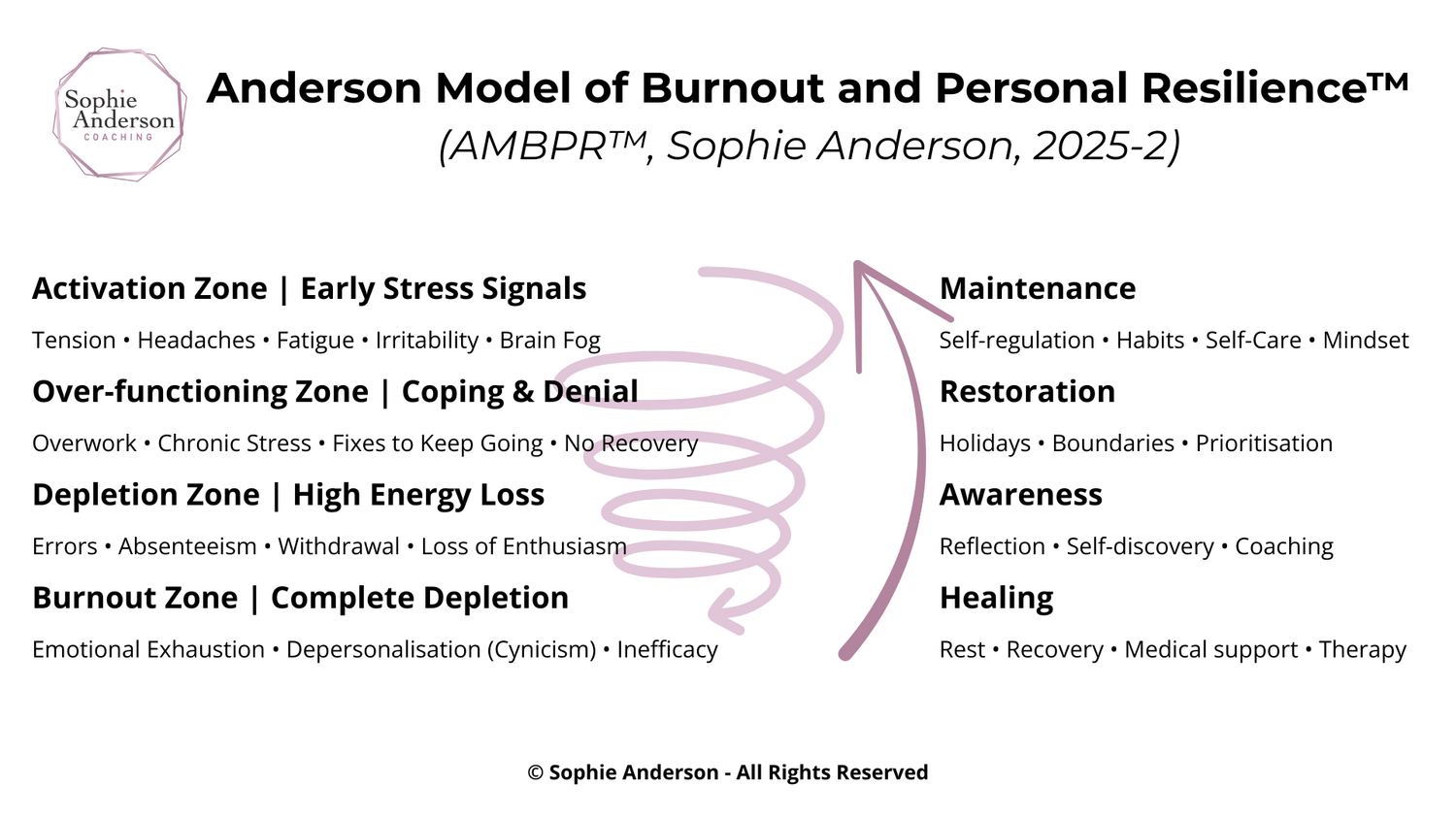
While you may still be functioning and trying to "keep it together", if you can feel the drift, make it visible; do something about it.
The most credible, high-performing professionals I work with are the ones who notice early and adjust before they crash. Be like them.
I can help
If you’re an individual navigating this yourself, I offer coaching support.
I also deliver keynotes and workshops on staying well and on burnout prevention for organisations.
And if you’re an employer and one of your people is showing any signs of burnout, you can sponsor a coaching package to support them.
Catch the signs early, take practical action, and together we can absolutely prevent burnout.

Like it? Share it 👉🏼


About the Author
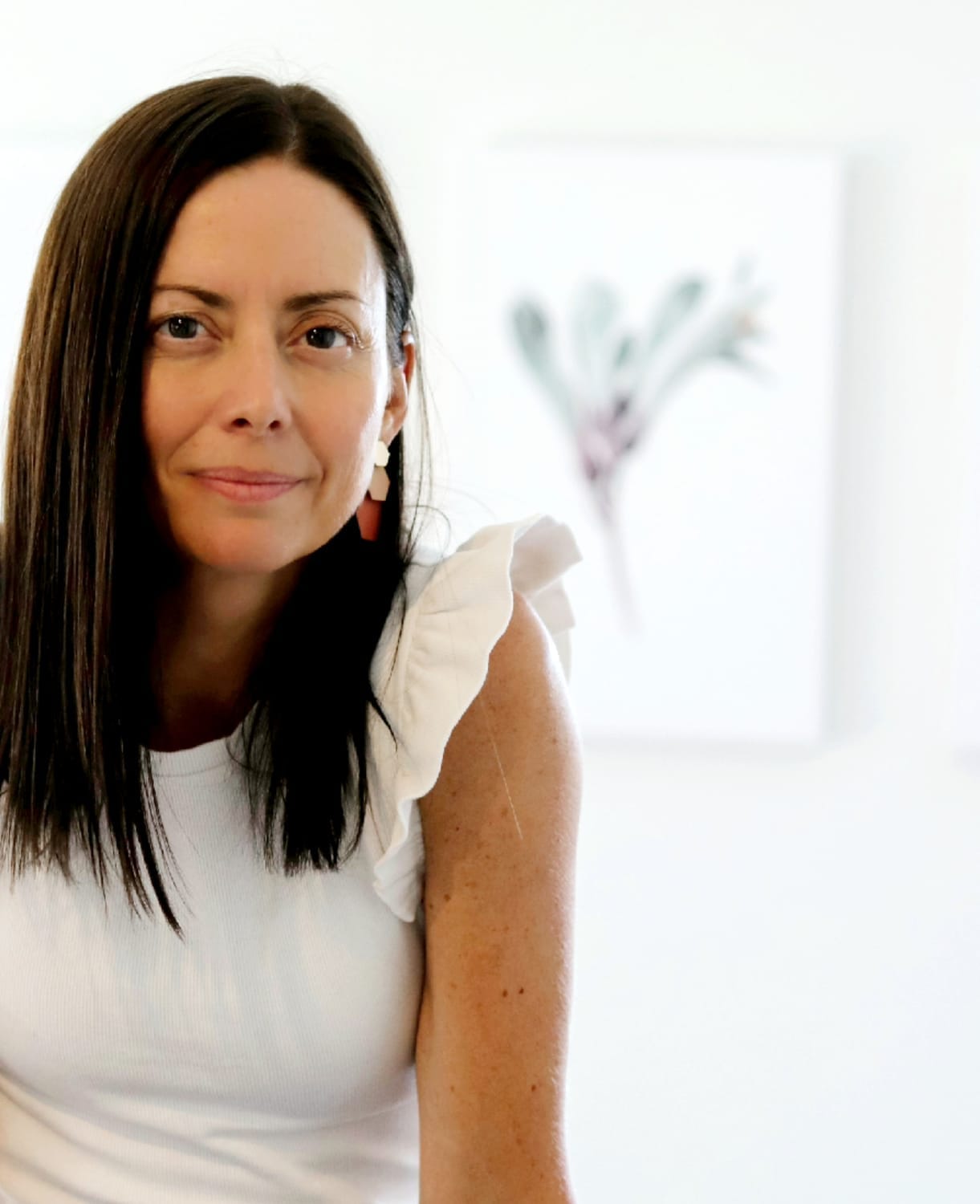
Hello, I'm Sophie, and I am so glad you're here!
I am a burnout prevention specialist and the creator of the Anderson Model of Burnout Prevention (AMBP™) - a practical framework that maps how burnout accumulates across three zones: Activation, Over-functioning and Depletion, and identifies the intervention points that stop professionals from crossing the threshold into burnout.
I work with professionals, leaders and organisations across Australia and worldwide through personal coaching, keynotes and workplace wellbeing programs.

Recent Articles - All Categories
Sophie's Newsletter
For busy, brilliant humans who refuse to succeed at the cost of their health.
Every edition delivers practical insights on burnout prevention, self-leadership and sustainable high performance.
Tools and strategies you can apply straight away
Articles that help you recognise where you are in the zones
Insights leaders can bring into their teams
I work with integrity and respect your privacy. Your details are safe with me, and you can unsubscribe to this mailing list anytime.



© Sophie Anderson 2026 | All rights reserved
ABN 99662932852
📍 Cairns, Australia

I respectfully acknowledge the Traditional Owners of the land on which I coach, collaborate and grow, the Gimuy Walubara Yidinji and Yirrganydji Peoples. I acknowledge and pay respect to Aboriginal and Torres Strait Islander Peoples as the world’s oldest living culture and embrace their continued connection to land, waters and community. I pay my deepest respect to all Aboriginal and Torres Strait Islander Elders past and present.
I also recognise, value and celebrate diversity and act in the spirit of inclusion.