

🎙️ From the No Time for Burnout podcast
Is burnout inevitable in your industry?
This blog is based on an episode of the No Time for Burnout podcast. You can listen on YouTube, Spotify, Apple Podcasts or Amazon Music, and it's also available on other podcast platforms.
The question I keep getting asked
"Is it inevitable that I'll burn out? I'm a social worker."
"I'm a doctor."
"I work on Wall Street and everyone around me is burning out."
I get some version of this question a lot, and it's a fair one. You're not being dramatic. Healthcare, education, tech and plenty of other industries come with heavy workloads, and when everyone around you is running on empty, it starts to feel like the weather. Of course you wonder if it's coming for you too.
Something that's been sitting with me
A client once told me that at university they were told to prepare for burnout in their demanding industry. Like it was part of the course fees.
I get why people say that, because they've seen it happen. But I keep wondering how many of us have accepted burnout as our fate because nobody showed us another way. I don't know the full answer to that, and I'd rather say so than pretend I do.
What I don't know
I haven't lived every one of these jobs, so I'm not going to tell you what your week feels like. I've been on the path towards burnout myself and caught it before I fell apart, but that's one story, not yours.
I'm a coach, not a clinician. And burnout isn't a medical condition anyway: the World Health Organization classifies it as an occupational phenomenon, resulting from chronic workplace stress that hasn't been successfully managed (WHO, 2019). What I can share is what I see in my work and what I'm still figuring out as I go.
What the research says is driving it
I went back to the research for this one, and it comes down to demands outweighing resources. Three things kept coming up, and they match what I hear from the people I work with.
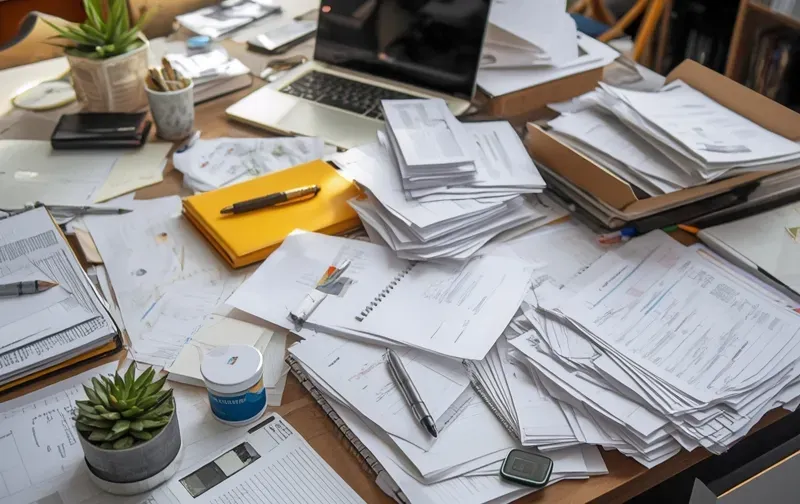
Heavy workloads
When time and workload pressure keep piling up, burnout risk goes up with it. Job demands are positively linked with burnout in the research (Galanakis & Tsitouri, 2022).
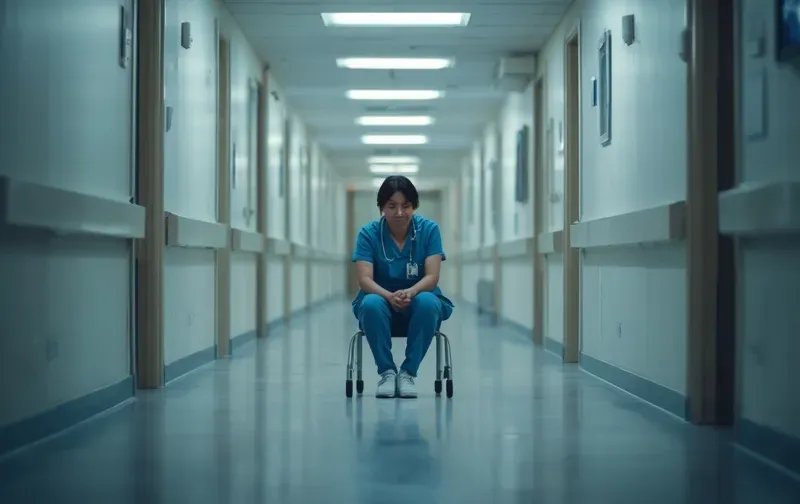
Emotional load
Carrying other people's hardest moments takes a toll. Healthcare, emergency and community service workers are particularly susceptible to compassion fatigue, described as secondary traumatic stress combined with cumulative burnout (Cocker & Joss, 2016).
I don't know how much of the whole picture this is, so I'm holding it loosely.
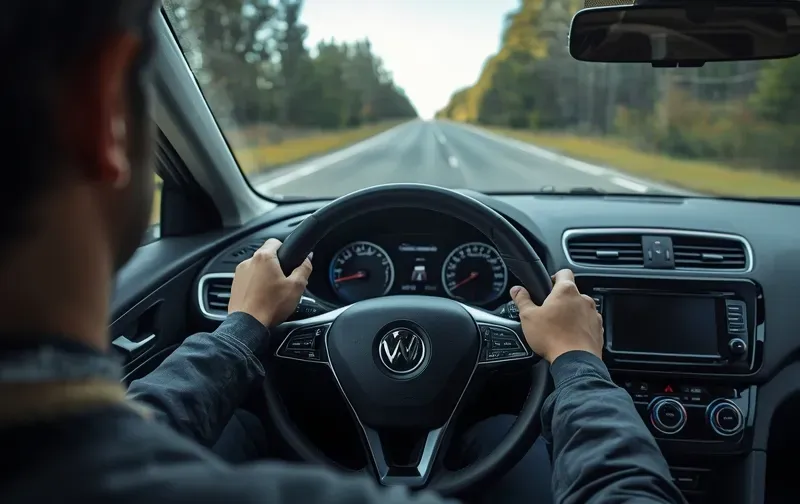
Lack of control
A review of 25 studies found moderately strong evidence that job control is linked with lower emotional exhaustion, and that low workplace support is linked with higher emotional exhaustion (Aronsson et al., 2017).
What the numbers say
These are figures reported in a 2024 paper, mostly from the pandemic years. They don't mean it's your fate. They mean you're not imagining the pressure.
30 to 50%
of healthcare professionals reported burnout (Kalinienė et al., 2024)
20 to 35%
of teachers reported burnout, same review (Kalinienė et al., 2024)
1,046
workers studied in Lithuania, where doctors and nurses had higher burnout than teachers and managers (Kalinienė et al., 2024)
Spotting the early signs
These are the earliest signs I look for. In my model, The Anderson Model of Burnout Prevention (AMBP), they sit in the Activation Zone. Performance still feels intact and from the outside it looks like success, but inside you know you're more reactive than usual and something is off.
- Uncharacteristic irritability and reactivity
- Unusual fatigue and disrupted sleep
- Reduced concentration, memory and focus
- Physical tension, headaches and migraines
- Digestive issues or an uneasy gut
- Healthy habits slipping
This is the earliest and most powerful intervention point, and where change requires the least effort. If you recognise a few of these, you haven't failed. You've noticed, and that's the most useful thing you can do.

Start with what you can influence
One tool I like comes from Stephen Covey's The 7 Habits of Highly Effective People. Draw two circles. The big one is everything you're worried about, which Covey called your Circle of Concern. Inside it, draw a smaller one for the things you can actually do something about: your Circle of Influence.
Covey's point is that where you spend your energy matters. Pour it into the big circle and your influence shrinks. Put it into the smaller one and it grows (Covey, 1989).
I'm not saying the system is fine. Some of it probably isn't. But waiting for the system to change before you look after yourself is a risky plan.
Try asking yourself: am I heading for burnout, or can I change where this is going? And this one: do I want things to change, or do I want to change things?

Five places to start
These five line up with the three pillars in the AMBP: awareness, restoration and lifestyle. My friend, pick the one that made you wince a little.

Look at your load
Are you overcommitting? Is there anything you can delegate or drop? Get it out of your head and onto paper.

Set boundaries
Practise saying no, and say what you need clearly to the people who need to hear it.

Manage your energy, not just your time
Yoga, meditation, a walk, whatever feeds your body and mind.

Plan your breaks
Take regular ones, and have a holiday booked so there's something to look forward to.

Choose your people
Spend time with people who encourage you to look after yourself, not just vent about work. A good vent is fine, I love one, but it can't be the only thing you do together.
[TESTIMONIALS HEADLINE]
[CLIENT NAME]
[ROLE]
★★★★★
[TESTIMONIAL QUOTE]
[CLIENT NAME]
[ROLE]
★★★★★
[TESTIMONIAL QUOTE]
Questions I get asked
No. The World Health Organization classifies burnout as an occupational phenomenon, not a medical condition. If you have symptoms that worry you, please see a qualified health practitioner.
I don't think it is, though I haven't worked in those jobs myself. The research links burnout with high demands, low control and low support, and those are things that can be worked on, by employers and by you.
In the AMBP, the earliest signs sit in the Activation Zone: irritability, unusual fatigue, reduced focus, physical tension, digestive issues and healthy habits slipping. This is where change takes the least effort.
On YouTube, Spotify, Apple Podcasts and Amazon Music, and it's also available on other podcast platforms.
[OFFER NAME]
[PRICE]
[PAYMENT PLAN]
- [WHAT IS INCLUDED]
- [WHAT IS INCLUDED]
- [WHAT IS INCLUDED]
[GUARANTEE HEADLINE]
[GUARANTEE TERMS]
You're not on your own
There are plenty of people in your industry who care deeply and want to support each other with wellness, not just survival. If you're overwhelmed and not sure where to begin, reach out to me.
And I'd love to know: what would you add to this list? I'm still learning, and I'd rather hear what's working for you than assume I've got it all worked out.
Listen to the full episode on YouTube, Spotify, Apple Podcasts or Amazon Music.

References
Anderson, S. (2025). The Anderson Model of Burnout Prevention™ (AMBP) [Conceptual framework]. sophieanderson.au/ambp-framework
Aronsson, G., Theorell, T., Grape, T., Hammarström, A., Hogstedt, C., Marteinsdottir, I., Skoog, I., Träskman-Bendz, L., & Hall, C. (2017). A systematic review including meta-analysis of work environment and burnout symptoms. BMC Public Health, 17(1), 1-13. https://doi.org/10.1186/s12889-017-4153-7
Cocker, F., & Joss, N. (2016). Compassion fatigue among healthcare, emergency and community service workers: A systematic review. International Journal of Environmental Research and Public Health, 13(6), 618. https://doi.org/10.3390/ijerph13060618
Covey, S. R. (1989). The 7 habits of highly effective people. Free Press. See Habit 1: Be proactive (FranklinCovey).
Galanakis, M. D., & Tsitouri, E. (2022). Positive psychology in the working environment. Job demands-resources theory, work engagement and burnout: A systematic literature review. Frontiers in Psychology, 13, 1022102. https://doi.org/10.3389/fpsyg.2022.1022102
Kalinienė, G., et al. (2024). Does the level of burnout differ between occupational groups in Lithuania? Frontiers in Public Health, 12, 1364886. https://doi.org/10.3389/fpubh.2024.1364886
World Health Organization. (2019). Burn-out an "occupational phenomenon": International Classification of Diseases. who.int